Poland has imposed new air-traffic restrictions along its eastern border with Belarus and Ukraine, in response to recent drone incursions that violated its airspace, most notably a raid involving dozens of drones allegedly launched towards or from those border areas.
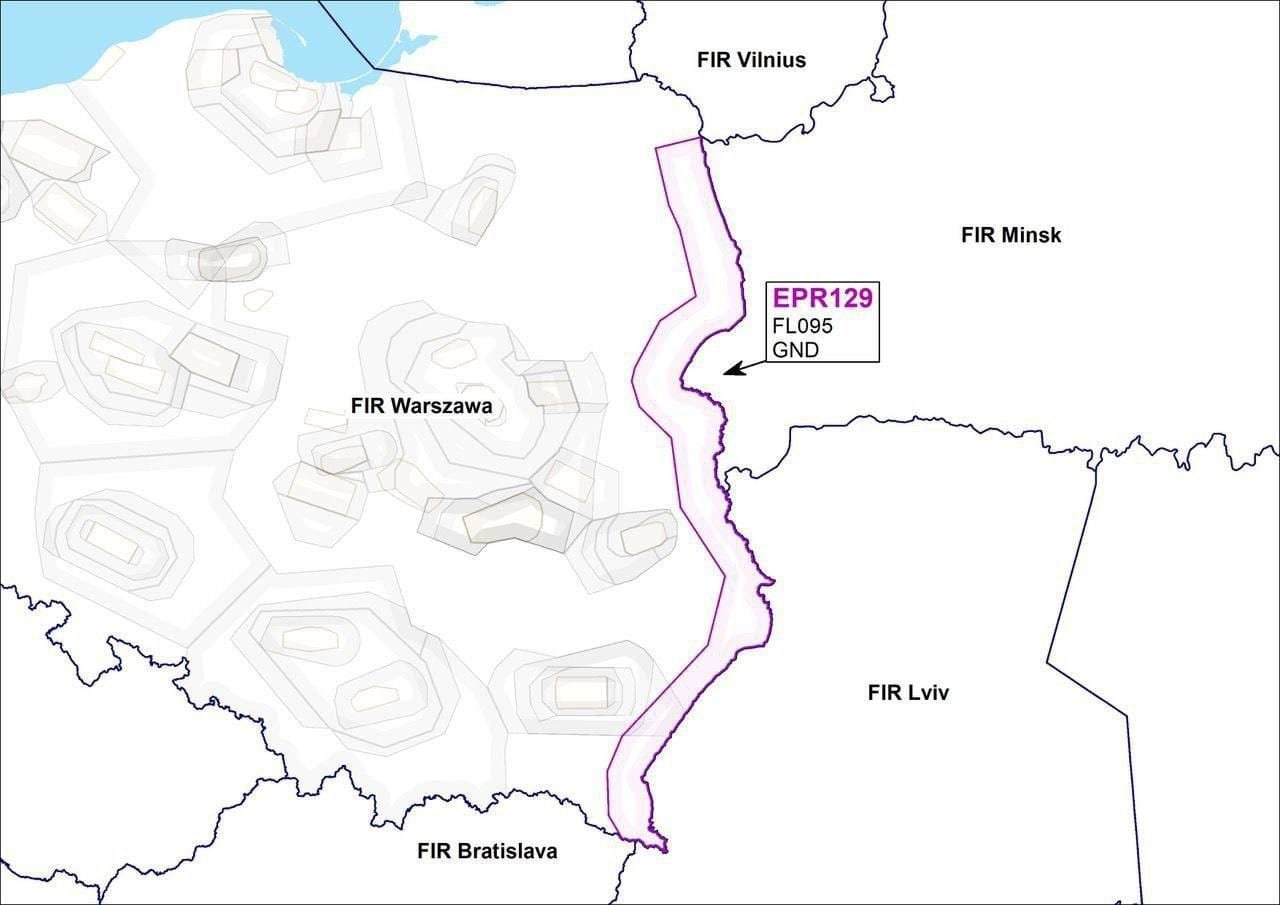
Under the order from the Polish Air Navigation Services Agency (PANSA) and at the behest of the country’s Armed Forces Operational Command, the restricted zone—designated EP R129—took effect at 22:00 GMT on Wednesday and will remain in force until December 9.
The restrictions apply primarily to small, non-commercial aviation: recreational aircraft, helicopters, and unmanned aerial vehicles (drones). During daylight hours, certain flights are allowed if they comply with specific requirements submitting a flight plan, having working transponders (modes A & C or S), maintaining two-way radio communication with air traffic authorities, etc.
From sunset to sunrise, the rules tighten: most civilian flights are banned in the EP R129 zone, except for military aircraft and specially authorised flights (medical evacuations, state-purposed missions, search and rescue or other emergencies) which meet the criteria. Civilian unmanned aircraft are barred 24/7 in that area.
The no-fly height threshold is about 3 kilometres (approximately 1.86 miles) above ground level; above that altitude, normal international or commercial flights are largely unaffected, as most operate at higher levels.
These measures follow what Polish authorities describe as “unprecedented” violations—reports say around 19 Russian-made drones breached Polish airspace during a large-scale assault on Ukraine, some of which were shot down after crossing borders. That incursion has raised serious questions about national and NATO security.
Poland’s government has reiterated that passenger aviation is not affected by these measures, and commercial operators flying above the restricted height are able to continue as normal.