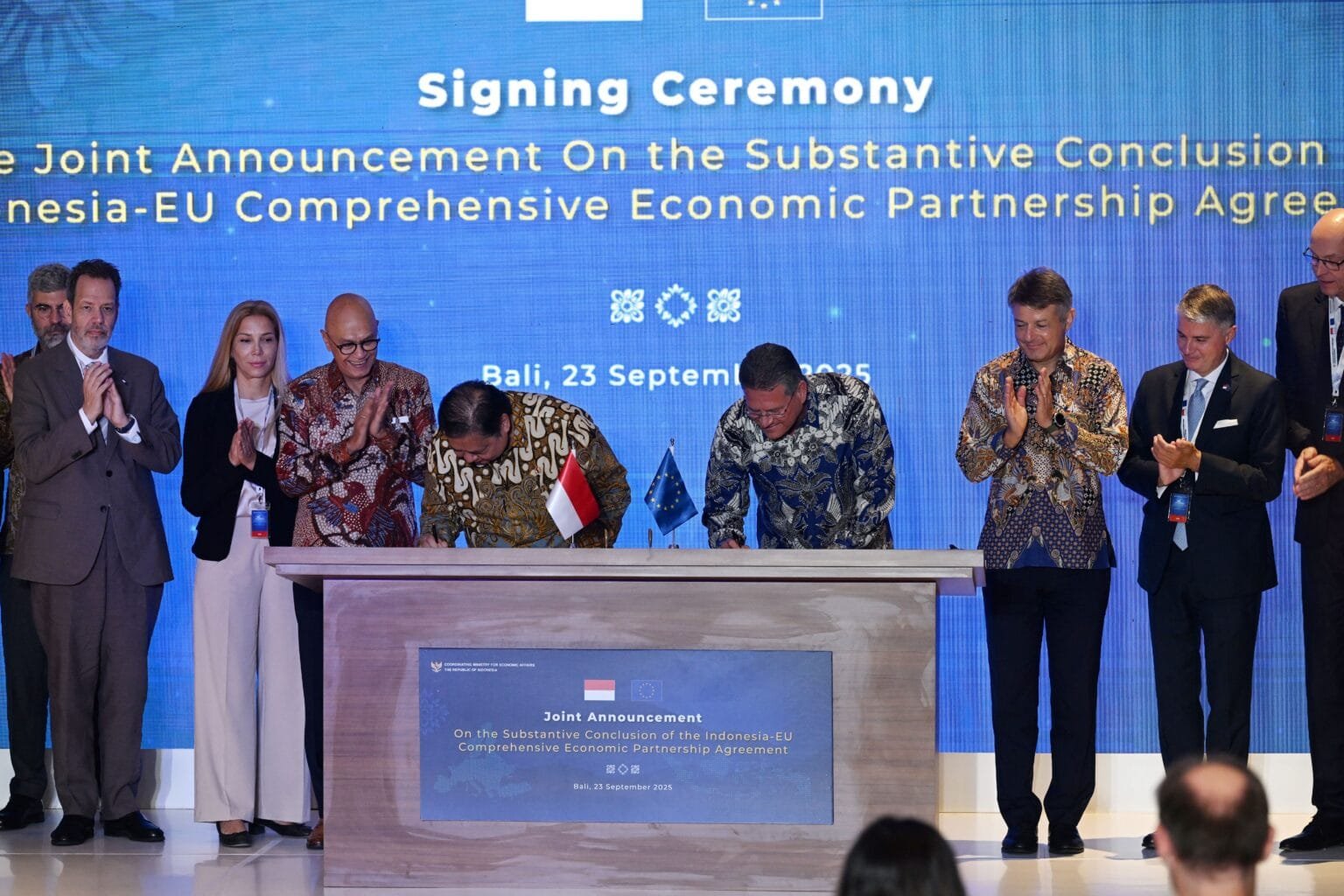
Indonesia and the European Union announced on September 23, the “substantive conclusion” of their Comprehensive Economic Partnership Agreement (CEPA), formally sealing a landmark trade pact after roughly nine to ten years of negotiations. Under the deal, about 80% of Indonesian exports to the EU—including palm oil, fisheries, textiles, footwear, and other goods—will benefit from zero tariffs. At the same time, the EU will cut or simplify tariffs on its agricultural products, manufactured goods, cars and foodstuffs entering Indonesia.
The agreement also addresses non-tariff measures, procedural and regulatory barriers, and aims to improve market access in both directions. Trade between the two partners stood at about US$30.1 billion in 2024, and officials expect the deal to nearly double bilateral trade within five years of implementation. The pact is expected to enter into force on January 1, 2027, pending legal reviews, translations, and ratifications by legislatures and relevant bodies on both sides.
Indonesian Economic Minister Airlangga Hartarto underlined the nation’s aim to use the deal to spur growth in export sectors such as palm oil, textiles and fisheries while also attracting more EU investment, especially in industries related to critical minerals and renewable energy. From the EU side, Trade Commissioner Maroš Šefčovič pointed to this agreement as central to the bloc’s strategy of trade diversification and securing supply chains amidst global economic uncertainty.
Challenges remain: implementing sustainability and environmental safeguards, especially compliance with the EU’s deforestation regulation, is expected to test how the deal operates in practice for industries such as palm oil. Moreover, certain sensitive products remain excluded or subject to quota or other limits.