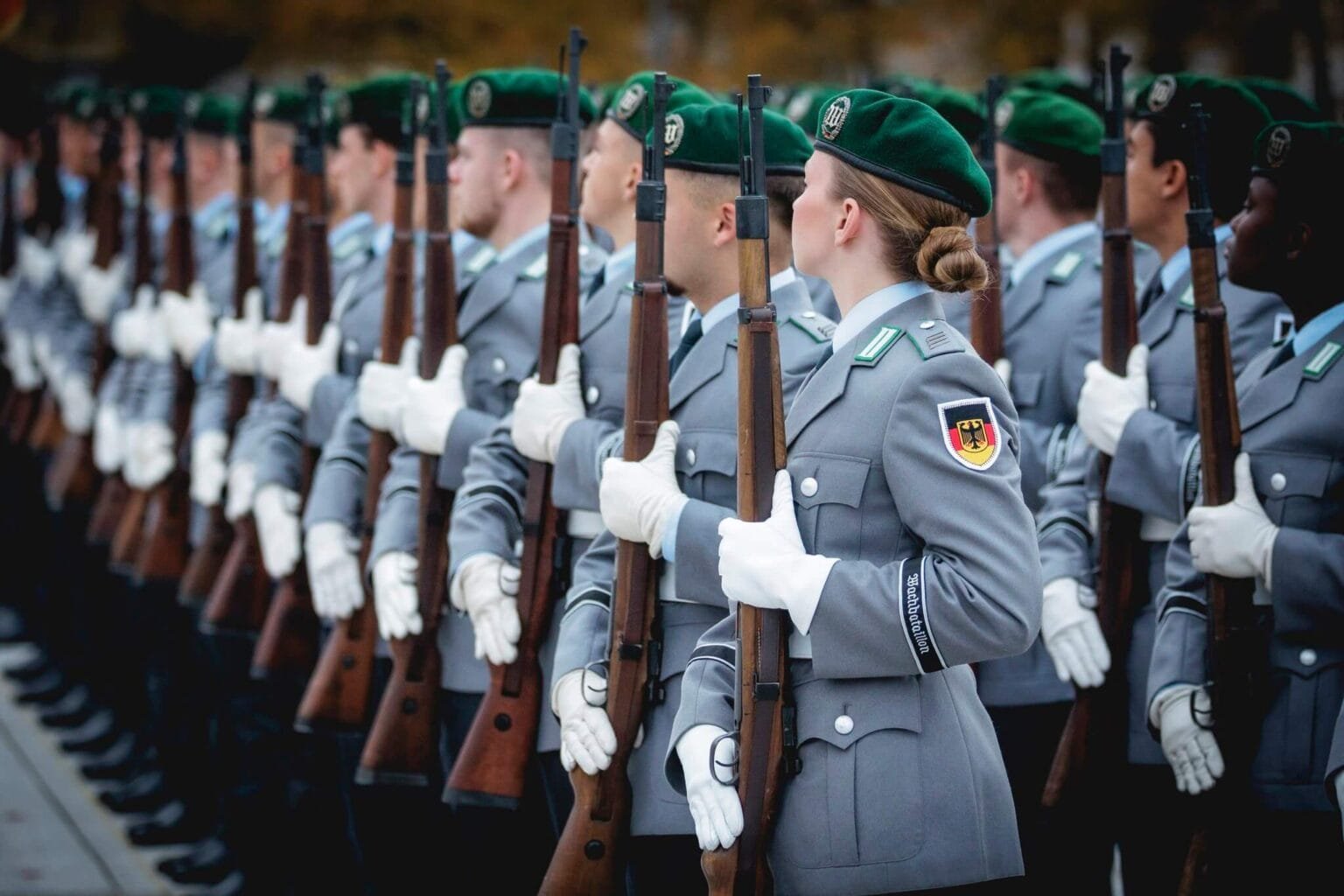
Germany’s armed forces have recorded a striking 28% surge in recruits from January through late July 2025 compared to the same period in 2024, with more than 13,700 new personnel joining the Bundeswehr, an unprecedented spike in recent years that reflects Germany’s accelerating drive to meet NATO defense targets amid escalating regional tensions with Russia The recruitment boom spans all military branches army, navy, air force and support services and comes alongside an 11% rise in initial consultations, an 8% uptick in direct applications, and a 31% jump in civilian-sector interest in defence careers.
Under Chancellor Friedrich Merz, Germany has committed to expanding its active-duty force from approximately 183,000 today toward a goal of 260,000 soldiers by the 2030s. These plans coincide with a historic shift in defense policy: liberation from postwar fiscal constraints via relaxed debt rules, a €100 billion Bundeswehr modernization fund, and an ambitious ramp-up to meet NATO’s revised spending targets now up to 5% of GDP by 2029.
Defense Minister Boris Pistorius has emphasized Germany’s need for up to 60,000 additional troops to fill capability gaps and contribute meaningfully to NATO’s future land forces, cyber units, air defense and maritime readiness, but the recruitment jump signals that Berlin may finally be gaining traction after years of fallow expansion efforts. Analysts agree that this mobilization reflects not just policy but shifting public sentiment, as more Germans respond to changing threat perceptions and a broader realization that national and alliance security now require active contributions rather than passive reliance.
With Germany also preparing high-profile procurements including Eurofighter jets, armored vehicles and air-defense systems, and sending Patriot batteries to Ukraine under a U.S. cooperation deal, the recruitment boom underscores comprehensive momentum in both personnel and hardware dimensions of Europe’s rearmament trend.
Germany’s record jump in enlistments, combined with expanded spending and procurement, marks a watershed in its post‑Cold War trajectory, positioning its military to play a decisive role in strengthening NATO’s eastern flank and responding to Russia’s growing assertiveness.