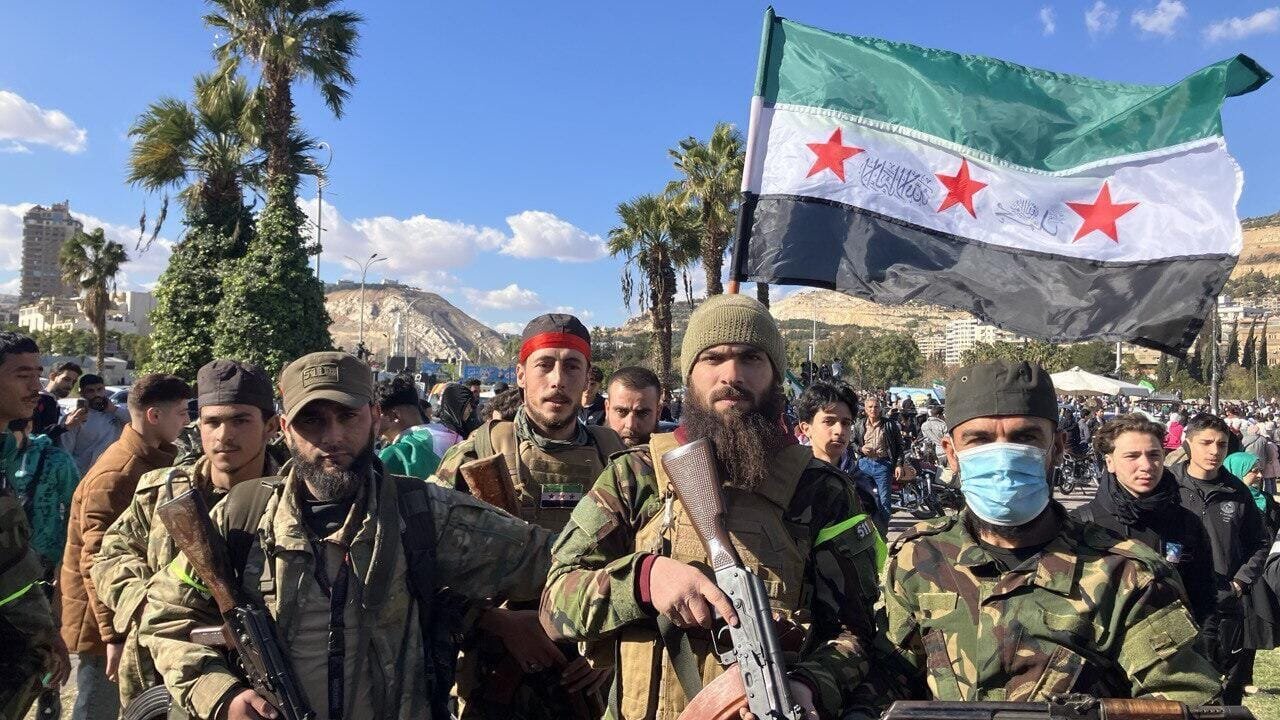
Britain established covert communication channels with Hayat Tahrir al-Sham (HTS) in Syria prior to the fall of President Bashar al-Assad’s regime, according to Sir Richard Moore, former head of the UK’s foreign intelligence service (MI6).
Speaking at the British Consulate in Istanbul on September 19, Moore revealed that these contacts began after HTS announced a break with al-Qaeda, despite the UK continuing to classify the group as a terrorist organization. This relationship facilitated Britain’s swift diplomatic return to Syria following the regime’s collapse. Moore emphasized the importance of “anticipation” in intelligence work, noting that the early engagement with HTS allowed London to re-establish itself in Syria within weeks after the group’s leaders assumed power.
Following the fall of Assad’s regime, HTS, led by Ahmed al-Sharaa, took control of Syria. Al-Sharaa, a former deputy commander of HTS, was appointed as the country’s transitional president. His leadership marked a significant shift in Syria’s political landscape, with HTS leaders assuming prominent positions in the new government.
The UK’s engagement with HTS has sparked debate within the British government. Foreign Secretary David Lammy has labeled Assad as the “rat of Damascus” and emphasized the government’s consistent stance against re-engaging with the former regime. However, Lammy also acknowledged that HTS will be judged by its future actions, urging caution given its past links to al-Qaeda.